

(Mid-Year 2026)
Mid-Year 2026 Dynamics
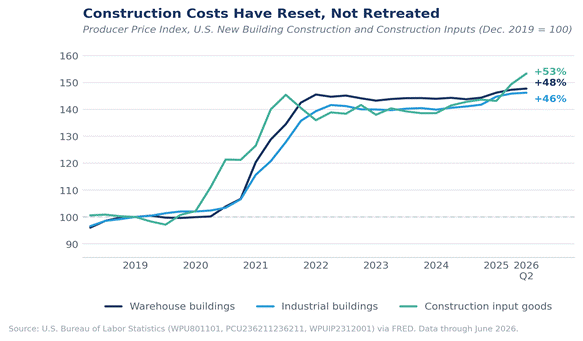
Something structural has happened to U.S. real estate over the last six years: the cost of building did not come back down. It reset. Producer prices for new warehouse construction are up 48% since the end of 2019. Industrial buildings are up 46% and the goods going into nonresidential construction are up 53%. Roughly seven points of that came in the first six months of 2026 alone. This is not a lingering supply-chain story. It is the new base, and the market is finally underwriting it that way.
The Turner Building Cost Index tells the same story, ending the second quarter at 1,552, up 5.2% year over year and roughly a third above 2019. Materials remain expensive and tariffs are adding pressure, but the bigger point is that costs have stayed elevated even as the reasons have changed. Contractors are absorbing some of the increase today; input costs are rising at roughly twice the rate of bid prices. In other words, margin is doing work that pricing eventually will. The question is no longer whether construction costs normalize. It is what existing real estate is worth when they do not.
The Math That Stops a Shovel
The harder constraints are labor and power. Eighty-two percent of contractors still report difficulty filling hourly craft positions, and construction wages continue to outpace the broader private sector. Power is even harder to solve. Large transformers can take roughly three years, switchgear can take close to a year, and grid connections for major loads can stretch to five years in certain markets. Power and mechanical equipment now represent roughly 20% of construction cost, about three times the share of a decade ago. Add it up and you get the number that stops a shovel: replacement cost rents are roughly 20% above Class A market rents. Morgan Stanley reaches the same conclusion from the other direction, with replacement costs up about 70% since 2020 versus market rents up 50%. Until rents rise into that gap or costs fall into it, most ground-up development does not pencil. That is not a forecast. It’s math.
Industrial: Scarcity Is Doing the Work
Industrial is where the math shows up most clearly. Roughly 305 million square feet is under construction nationally, down from a 716 million square foot peak in 2022 and represents about 1.7% of existing inventory versus a ten-year average of 2.6%. Deliveries in the first half of 2026 were nearly 20% below the same period last year. The pipeline has started to rebuild, and we should not pretend otherwise, but it is rebuilding from a very low base and much of the new product is build-to-suit. The speculative wave that normally caps a recovery is still difficult to finance at rents tenants will pay.
At the same time, demand has re-engaged. Vacancy fell to 6.9% in the second quarter, net absorption reached 62.1 million square feet, and asking rent growth accelerated to 2.9% year over year. That combination matters: recovering demand is running into a supply pipeline that is still well below historical norms. Constrained supply meeting improving demand is the oldest setup in real estate.
The Small Building Advantage
The scarcity is even more pronounced in smaller, functional buildings. Only about 5% of shallow-bay industrial inventory has been delivered since 2010, and nearly 80% predates 2000. These buildings are expensive to reproduce on a per-foot basis, infill land is costly, and the rent needed to justify speculative development simply isn’t there. That is why a functional 40,000 to 60,000 square foot facility in a market with no pipeline can be more difficult to replace than a 700,000 square foot box in a market that can build another one. Replacement cost is not just a gateway-market story. In many secondary markets, the gap can actually be wider. Rents are low, but construction costs are not proportionally lower.
Mission-Critical and the Manufacturing Reset
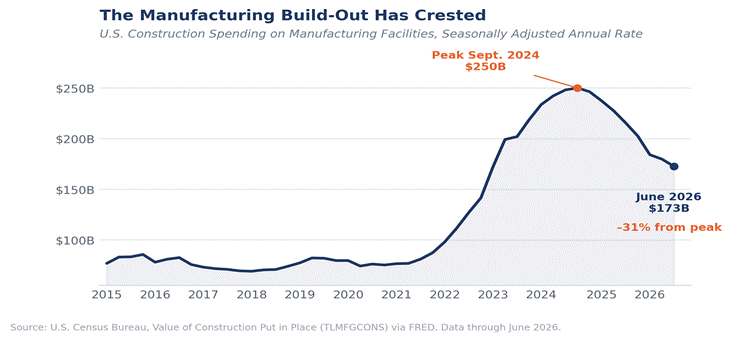
The reshoring build-out has also crested. Manufacturing construction spending peaked at roughly $250 billion annualized in September 2024 and fell to about $173 billion in June 2026. That gets reported as bad news. For the owner of a specialized facility that already exists, it can mean the opposite. Less new product makes the existing buildings harder to replicate.
A manufacturing or processing facility is one of the most difficult assets in real estate to replace. Specialized power, floor loads, environmental permitting, and equipment are often designed into the building itself. When a tenant has spent years and millions of dollars fitting out a plant, the cost of leaving is not the moving truck. It is rebuilding at 2026 prices, waiting through a multi-year power queue and finding the labor to do it. That is what mission-critical actually means. The lease matters. The credit matters. But so does the tenant’s economic reality if it must recreate the facility somewhere else.
A Real-World Example: Kreate | Georgetown, Texas
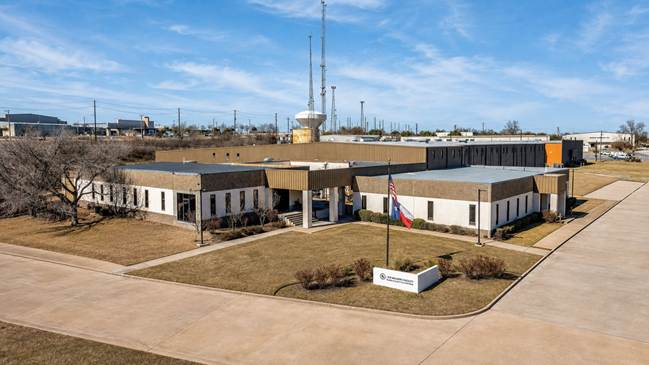
We recently saw the replacement-cost argument play out in real time. SAB Capital facilitated a sale-leaseback for Kreate, a plastics manufacturer expanding in Georgetown, Texas. Kreate needed additional capacity, but instead of waiting to build it, the company acquired an existing 80,000 square foot facility just a few miles from its current manufacturing operation. The building already had the heavy power and industrial infrastructure needed to support Kreate’s expansion, and the company is now investing significant capital to convert it into a specialized manufacturing and automated warehousing facility. Could Kreate have built a new facility? Probably. But at today’s construction costs, with today’s power constraints, and on today’s timeline, why recreate what already exists? The sale-leaseback allowed Kreate to solve the real estate need and redeploy capital back into the business.
Capital is increasingly recognizing that difference. Industrial represented 63% of net lease investment volume in the second quarter, up from 56% a year earlier, while sale-leaseback activity continues to give corporate owners a way to monetize real estate at a basis that can still be well below replacement cost. The opportunity for investors is not simply buying a lease. It is buying an asset that would be difficult, expensive or irrational to develop.
Retail Got Here First!
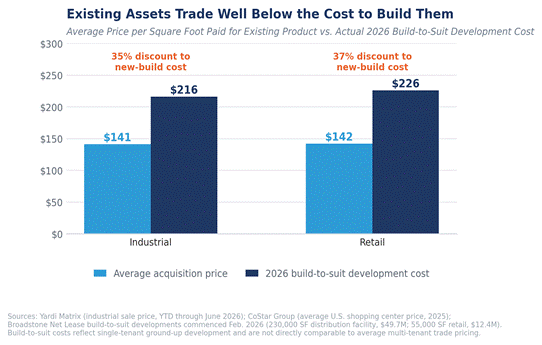
Retail has been living with this dynamic for more than a decade. Annual completions averaged just 0.5% of inventory from 2009 through 2024, versus 2.1% before the Great Financial Crisis, and the shopping center pipeline is now below 0.3% of existing inventory. Vacancy sits at 6.0%, roughly 140 basis points below its long-run average. The reason is simple: market rents generally do not support new construction. National rents are in the mid-$20s per foot while new development often needs $30 to $35 or more. Existing shopping centers trade around $142 per foot, while current build-to-suit retail development can exceed $200 per foot. The market spent years talking about too much retail. Today, in many markets, the problem is that almost nothing gets built.
What This Means for Owners and Investors
The clearest evidence is what tenants do when leases expire. NNN REIT has renewed 83% of expiring leases over the last decade with roughly 99% rent recovery. Realty Income has recaptured 103% of prior rent across more than 7,700 re-leased properties, and Prologis is signing rollovers at 36% above expiring rents. Those numbers are not just a function of strong operations. Tenants are increasingly comparing the cost of renewing against the cost, time and disruption of replacing their space. In many cases, leaving is simply the more expensive option.
For investors, that changes the underwriting. Basis relative to replacement cost is not a talking point; it is a risk variable. Two buildings with the same cap rate and the same tenant credit are not the same investment if one can be replicated across the street and the other cannot. On every deal, ask three questions: What would it cost to build this building today? How long would it take? And would anyone realistically do it at the rent being paid? Where the answers are “a lot more”, “a lot longer”, and “probably not”, the existing asset has an advantage the cap rate alone does not capture.
Conclusion
Construction costs are not going back to 2019 simply because the market would like them to. Labor remains tight, power is constrained, materials are expensive and development rents still sit above what many tenants can pay. The result is muted supply and a growing advantage for functional real estate that already exists. Tenants do not renew because of loyalty; they renew when the alternative is economically worse. Investors should think about replacement cost the same way. The cheapest way to own modern industrial and necessary-based retail is often to buy it from someone who already built it.
At SAB Capital, this is how we look at every asset we take to market. Not only what it earns today, but what it would cost to replace, how difficult it would be to replicate, and what that means for the tenant occupying it and the buyer underwriting it. The market does not value scarcity because it sounds good in a pitch. It values scarcity because scarcity is expensive to solve.
If you’re interested in understanding how replacement cost is affecting the value of your real estate and how that basis can be used more effectively to accomplish your investment or portfolio management goals, please reach out to our transaction professionals.