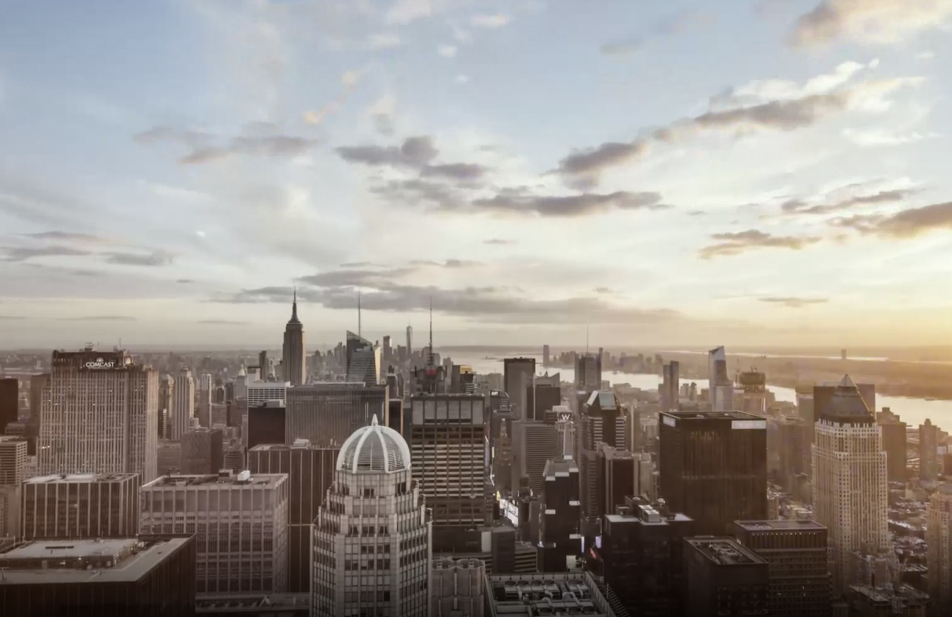


Brooklyn’s commercial real estate market continues to show steady underlying strength amid a cautious early-2026 environment. Core fundamentals remain solid across property types, supported by persistent low inventory and demand from creative, tech, and logistics users. At the same time, elevated financing costs, selective buyer activity, and the new administration’s aggressive push on housing affordability and tenant protections introduce notable headwinds. For finance-focused investors, this creates a balanced landscape: industrial assets offer dependable performance and downside protection, while development opportunities, particularly in rezoned waterfront and transit-adjacent areas, hold meaningful upside tied to policy momentum.
TOTAL MARKET OVERVIEW
Brooklyn finished 2025 with 1,191 commercial transactions totaling $6.6 billion. This represents a 16% drop in dollar volume from 2024, but only a 3% decline in deal count, keeping activity aligned with the borough’s 10-year average. Q4 provided a clear lift, with 277 deals generating nearly $1.8 billion and demonstrating resilience in mixed-use and multifamily sectors.
Early 2026 has brought a measured slowdown. January contracts fell 15.8% month-over-month and 11.3% year-over-year, marking the softest opening since 2021, while listings have increased modestly and given buyers slightly more negotiating power amid mortgage rates near 6.23% and ongoing affordability constraints.
The Federal Reserve’s decision to hold rates at 3.5%–3.75% provides welcome predictability for financing in the near to medium term. Mayor Zohran Mamdani has moved swiftly on housing priorities: reviving the Office to Protect Tenants, launching “Rental Ripoff” hearings, forming task forces to accelerate production on city-owned sites, and appointing new Rent Guidelines Board members. With COPA effectively sidelined after the veto and insufficient override votes, traditional sales face fewer procedural obstacles, though voluntary nonprofit alternatives remain possible. A more pressing concern emerged in mid-February with the mayor’s preliminary FY 2027 budget proposal, which includes a 9.5% property tax increase as a “last resort” contingency to close a multi-billion-dollar gap if Albany does not approve higher taxes on high earners and corporations. This has sparked debate and pushback with potential implications for operating costs, cap rates, and investor sentiment if enacted.
ECONOMIC OVERVIEW
Brooklyn’s market splits in two alternative directions. Industrial properties benefit from chronic supply constraints and consistent end-user demand, maintaining low vacancy (typically 4.7%–9.6% in prime submarkets) and firm-to-rising rents, positioning them as a reliable hedge against broader volatility.
Multifamily and mixed-use drove the bulk of 2025 volume (~$3.4 billion combined), but industrial’s stability stands out. Greater Downtown Brooklyn led in dollar volume last year (~$2 billion), while northern and central areas showed the highest transaction counts, underscoring the borough’s distributed strength. Should rates ease later in 2026, transaction velocity could rebound, particularly in waterfront innovation districts where rezoning and public investment create long-term value.
RED HOOK
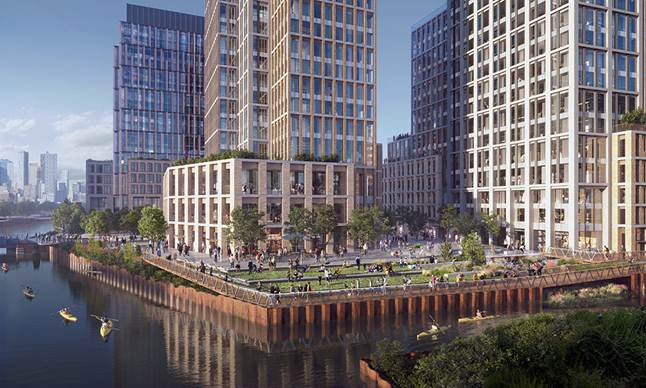
Red Hook remains focused on the Brooklyn Marine Terminal (BMT), the 122-acre waterfront site central to the borough’s maritime-industrial evolution. The $3.5 billion Vision Plan, approved in late 2025 and backed by $418 million in public commitments, proposes a 60-acre modern all-electric port alongside up to 6,000 housing units (40% affordable), 28 acres of open space, and supporting light-industrial/commercial elements. The Brooklyn Marine Terminal Development Corporation board is active, with environmental review advancing. The public comment period on the Draft Scope of Work extended to March 31, 2026, including a virtual scoping meeting on March 16.
Community advocates continue promoting a lower-cost (~$1 billion) alternative centered on pure maritime functions: freight modal shifts via “Blue Highways,” enhanced food security, green energy integration, and limited residential to preserve working-port operations and reduce truck traffic. This debate reflects a core economic tension, balancing industrial job retention with mixed-use density in a climate-vulnerable location. For investors, the site’s scale delivers optionality: stable cash flows from port modernization or greater development returns if housing priorities prevail.
SUNSET PARK
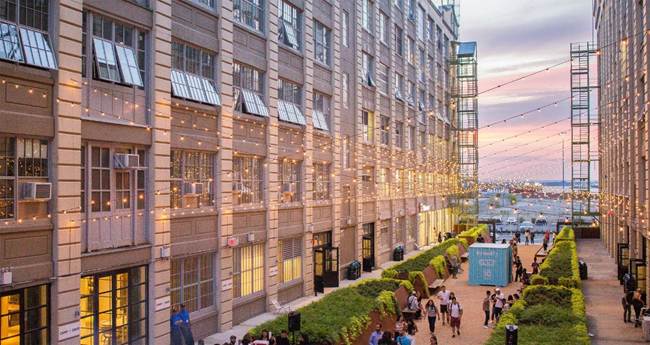
Sunset Park highlights Brooklyn’s industrial resilience, merging legacy infrastructure with emerging creative and tech uses. Industry City, the 35-acre anchor, sustains strong leasing momentum within a broader $2+ billion public-private investment corridor spanning 200 acres. Biotech expansions (e.g., Cresilon’s headquarters growth) and logistics interest persist, bolstered by the area’s transit access, low vacancy, and clean-tech initiatives like the prior Brooklyn Army Terminal solar RFP. The mayor’s emphasis on net-zero objectives and inclusive employment further supports this submarket’s trajectory toward rent stability and capital appreciation, making it especially attractive for value-add strategies in a persistently supply-constrained industrial segment.
GOWANUS
Gowanus serves as Brooklyn’s leading development engine. Post-Superfund cleanup and 2021 rezoning have unlocked a pipeline exceeding 8,500 units, repositioning the canal area as a desirable mixed-use destination. The Gowanus Oversight Task Force’s 2026 roadmap keeps key stalled projects like Gowanus Green (955 units of 100% affordable housing, school, and park) under review, with remediation disputes between National Grid and state environmental officials ongoing and a public meeting anticipated soon. Meanwhile, larger initiatives advance: Charney Companies and Tavros’s Gowanus Wharf campus (including 175 Third Street, targeting 1.1M SF and 1,100 units) secured a flagship Lifetime lease (85k SF), with delivery on pace for 2029. Construction at Anagram Gowanus (450 Union Street) topped out in January and progresses toward 2027 completion; recent financings reflect continued lender confidence in canal-proximate assets.
The submarket’s economics favor density bonuses and Mandatory Inclusionary Housing, with rising rents as amenities materialize. While oversight introduces execution timing risks, alignment with the administration’s production goals positions Gowanus for significant population and value growth, potentially 20,000 new residents by 2035.
CENTRAL BROOKLYN (Bedford-Stuyvesant, Prospect Heights, Fort Greene)
Central Brooklyn is transitioning toward larger, coordinated development, driven by strong transit connectivity and recent rezonings:
- The 2025 Atlantic Avenue Mixed-Use Plan enables ~4,600 homes (including 1,900 affordable) across 21 blocks near Prospect Park and subway access.
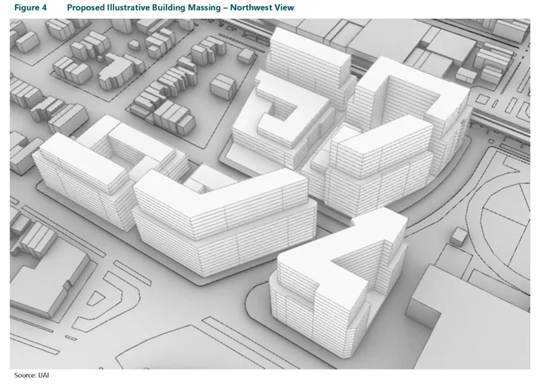
- L+M Development Partners’ Fulton Park proposal (1754 Fulton Street / 53 Utica Avenue) stands as the flagship: up to 2 million SF in 12 buildings yielding 2,035 units (with substantial affordable and Section 8 replacement components), commercial, community facilities, and open space, targeting 2026 approvals and 2036 buildout, with on-site resident rehousing to limit displacement.
- Complementary activity includes a new 17-story affordable tower at 1024 Fulton Street in Clinton Hill (125 units plus community/health spaces).
This area’s appeal lies in blending established neighborhoods with scalable density that supports the mayor’s affordability agenda. It offers attractive yield potential in mixed-income assets, enhanced by corridor job growth, though disciplined financing remains essential in the current selective climate.
SUMMARY
Brooklyn’s early-2026 market rewards thoughtful positioning: industrial delivers consistent, low-volatility performance, while development in waterfront and central submarkets benefits from policy-driven tailwinds for housing production. As the Mamdani administration’s initiatives evolve and with property tax uncertainty in play, the borough’s fundamental resilience makes it a strong anchor for diversified portfolios.
SAB’s Brooklyn team is marketing several sites throughout Gowanus, Sunset Park, Crown Heights, Bedford-Stuyvesant, Bay Ridge, and Bushwick. Feel free to reach out to discuss any questions related to the above information or to explore opportunities.